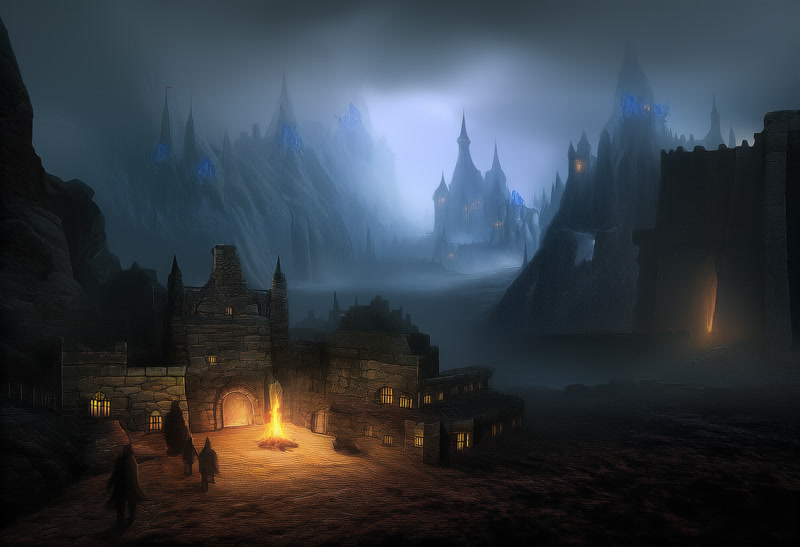
Our Gothic 1 Remake review starts where it matters: twenty-five years after the original Gothic first dropped us into the merciless Colony, Alkimia Interactive and THQ Nordic have brought the Valley of Mines roaring back. The Gothic 1 Remake launched on June 5, 2026, rebuilt from the ground up in Unreal Engine 5 — and it immediately sparked one of the most fascinating critic-vs-player divides we have seen in years. Critics called it mixed; players called it home.
In our Gothic 1 Remake review, we break down everything that matters: the modernized combat, the new Nyras prologue, UE5 performance on PC, and whether this faithful retelling still hits as hard in 2026. Whether you are a veteran of the Old Camp or a newcomer curious what all the fuss is about, we have you covered.
Bookmark this page and read on — the Colony awaits.
What Is the Gothic 1 Remake?
The Gothic 1 Remake is a from-the-ground-up reconstruction of Piranha Bytes’ legendary 2001 action-RPG, developed by Alkimia Interactive — a Spanish studio operating under the THQ Nordic umbrella. Rather than reimagining the original game’s design, Alkimia chose a path of faithful recreation: the same story, the same factions, the same punishing progression curve, but wrapped in an entirely new visual and technical layer powered by Unreal Engine 5.
This is not a remaster. Every asset, animation, and environment has been rebuilt. The world layout remains recognizable to anyone who memorized every shortcut through the Old Camp in 2001, but the level of environmental detail is orders of magnitude beyond what the original engine could dream of. Alkimia also took the opportunity to add new content — most notably the Nyras prologue, a playable backstory sequence that gives the Nameless Hero context the original never provided.
The remake launched on June 5, 2026, across PC (Steam and GOG), PlayStation 5, and Xbox Series X|S. The standard edition retails for $49.99, while a physical Collector’s Edition is available at $199.99. At launch, the game peaked at over 57,000 concurrent players on Steam — a testament to the enduring hunger for this style of uncompromising RPG design.
For those who missed the original, Gothic was always the anti-Elder Scrolls. Where mainstream RPGs hand you power on a silver platter, Gothic makes you earn every scrap. You start as nothing — a prisoner thrown into a magical barrier-surrounded colony — and the world treats you accordingly. NPCs ignore you, monsters kill you in two hits, and the only way forward is persistence. That philosophy is intact here, and it is exactly what makes this remake so divisive.
Story & World — Old-School Charm, New Paint
The core narrative of the Gothic 1 Remake is unchanged from the 2001 original. You are the Nameless Hero, a convict thrown into the mining colony — a lawless zone enclosed by a magical barrier that the king created to imprison ore miners but which has since become a self-governed society of rival factions. The Old Camp controls the ore trade with the outside, the New Camp plots to destroy the barrier through magical means, and the Sect Camp worships a dark deity called the Sleeper. Your survival depends on choosing a side — or playing them all against each other.
What the remake adds is depth, not deviation. The new Nyras prologue is the most significant addition, giving players a playable sequence set before the Nameless Hero’s imprisonment. This section provides narrative context the original lacked — you actually experience the events that lead to your character’s conviction, rather than just being told about them. It is a smart addition that grounds the story without rewriting it.
Faction dynamics remain the beating heart of the experience. Each camp offers a distinct worldview, questline, and progression path. The Old Camp’s hierarchical structure, the New Camp’s rebellious pragmatism, and the Sect Camp’s eerie fanaticism all feel more alive than ever thanks to expanded NPC routines and reactions. NPCs now have richer daily schedules and respond to your reputation in more nuanced ways. The world still operates on that old-school logic where respect must be earned through action, not dialogue selection.
The expanded crafting system and new climbing mechanics add meaningful traversal and progression options without diluting the core experience. Crafting is deeper than the original’s simple ore-to-sword pipeline, giving players more reasons to explore every corner of the colony. Climbing opens up vertical routes that feel natural to the terrain rather than bolted on — a small addition that meaningfully changes how you navigate the Valley of Mines.
If you want to see what other major releases are competing for your gaming time this season, check out our Summer Game Fest 2026 announcements and trailers roundup.
Combat System — Modernized But Still Gothic
Combat was always Gothic’s most polarizing system, and the remake does not shy away from that legacy. Alkimia kept the directional combat system that defined the original — you still swing your weapon based on directional input, and timing matters more than button-mashing. If you are coming from modern action-RPGs expecting a dodge-roll spectacle, you will need to adjust your expectations.
However, the system has been meaningfully modernized. The most significant change is the introduction of distinct weapon categories — swords, axes, and other weapon types each have their own feel, animation sets, and strategic niches. A sword handles differently from an axe, and choosing your weapon type is now a tactical decision rather than a cosmetic one. Combat abilities also evolve based on your progression and skill level, giving a sense of growth that the original’s stiffer system lacked.
A November 2025 rebalance pass further tweaked combat feel based on beta feedback, and it shows. The system now sits in an interesting middle ground — it is more accessible than the original’s notoriously clunky inputs, but it still demands patience and deliberate play. You cannot button-combo your way through encounters. You need to read enemy animations, pick your moments, and accept that early-game combat is supposed to feel overwhelming.
That last point is critical. Gothic has always been a game where the early hours are a gauntlet. The remake preserves this design philosophy — enemies do not scale to your level, and wandering off the beaten path will get you killed. For players who find this punishing design exhilarating rather than frustrating, the combat system delivers exactly what they want. For everyone else, it will feel like a relic that the remake was too respectful to discard.
The overhauled economy system also feeds into combat progression. Ore, trading, and resource management matter more, making every weapon upgrade feel earned rather than given. This is old-school RPG design at its most deliberate — and your mileage will vary based on how much you enjoy that style.
PC Performance — UE5 Growing Pains
Let us be direct: the Gothic 1 Remake has notable performance issues on PC at launch. Unreal Engine 5 is a demanding beast, and Alkimia’s implementation shows the growing pains that have become familiar across UE5 titles in 2026. Stuttering, frame-time inconsistencies, and FPS drops are all present, particularly in dense areas of the colony.
Here are the official system requirements:
| Component | Minimum | Recommended |
|---|---|---|
| GPU | NVIDIA GTX 1080 / RTX 2070 or AMD RX 6700 XT | NVIDIA RTX (12 GB VRAM class) |
| VRAM | 8 GB | 12 GB+ |
| CPU | Modern quad-core (expected) | Intel Core i7-7700K or better |
| RAM | 16 GB (32 GB preferred) | 32 GB |
| Storage | 50 GB SSD (mandatory) | 50 GB SSD |
| OS | Windows 10/11 64-bit | Windows 10/11 64-bit |
Those minimum specs are no joke. An RTX 2080 Ti — still a capable card — reportedly averages around 42 FPS without optimization tweaks. The 8 GB VRAM minimum is particularly relevant in 2026, where even mid-range GPUs are expected to handle modern titles. If you are unsure whether your GPU has enough memory for modern gaming, our deep dive into whether 8GB VRAM is enough for PC gaming in 2026 is essential reading.
The good news is that DLSS 4.5 is supported, and it makes a real difference. Engaging DLSS at Quality or Balanced mode can push a borderline system into playable territory. The community has also stepped up — the Nexus Mods Ultimate Engine Tweaks mod provides engine.ini adjustments that significantly improve frame pacing and reduce stuttering. If you are playing on PC, we strongly recommend installing this mod alongside DLSS for the best experience.
For context on how this compares to other demanding 2026 titles, our Crimson Desert PC performance guide covers similar UE5 optimization strategies that apply here. And if you are considering a GPU upgrade specifically for titles like this, our RTX 5060 vs RX 9060 XT comparison breaks down the best budget options for 2026 gaming.
The bottom line on performance: expect to tinker. This is not a plug-and-play experience on most hardware configurations. If you are willing to engage DLSS, adjust settings, and potentially install community mods, the game runs well enough. If you expect native 4K at 60 FPS on a mid-range card without compromise, you will be disappointed.
Visuals & Atmosphere — The Valley of Mines Reborn
If the Gothic 1 Remake has one undisputed strength, it is the visual transformation. Unreal Engine 5 renders the Valley of Mines with a level of detail that the original could only dream of. The colony feels like a real place now — not just a collection of low-poly structures connected by invisible walls, but an organic, lived-in environment with weather systems, dynamic lighting, and environmental storytelling baked into every surface.
Lumen global illumination and Nanite geometry are the stars of the show. The way torchlight flickers across stone walls in the Old Camp, the volumetric fog rolling through the forest paths, the way sunlight breaks through the barrier overhead — these moments are genuinely stunning. The art direction stays faithful to the original’s grim, utilitarian aesthetic while adding layers of atmosphere that make the world feel oppressive in the best way.
Character models have received a complete overhaul. NPCs that were once blocky approximations now have expressive faces, detailed clothing, and animations that convey personality. The Nameless Hero looks like an actual person rather than a polygonal placeholder. Environmental detail extends to flora, fauna, and weather effects that make the colony feel like a functioning ecosystem rather than a video game level.
The sound design deserves special mention. The original Gothic’s soundtrack was iconic, and the remake preserves that musical DNA while updating the production quality. Ambient sounds — clanking armor in the Old Camp, distant creature calls in the forest, the hum of the barrier — all contribute to an atmosphere that pulls you in and refuses to let go.
Of course, all this visual fidelity comes at a cost, which we covered in the performance section above. The game looks phenomenal, but you need the hardware to drive it. If you are building a rig specifically for 2026’s most demanding titles, our best gaming PC build guide for summer 2026 has component recommendations that will handle Gothic 1 Remake and then some.
Scores — Critics vs Players
The review score landscape for the Gothic 1 Remake tells a fascinating story. Here is how the numbers break down:
| Source | Score / Rating | Summary |
|---|---|---|
| Metacritic (Critics) | 73/100 | Mixed-to-positive; faithful retelling, warts and all |
| OpenCritic | “Fair” (48th percentile, 34 reviews) | Perhaps too ambitious for its budget |
| Steam (Players) | 85% Positive (~20,000 reviews) | Very Positive; fans love the faithful approach |
| PC Gamer | 60/100 | Too faithful to dated design; niche appeal |
| IGN | “Mixed” | Visually modern, mechanically dated |
The gap between critic and player scores is the defining narrative of this remake’s reception. PC Gamer’s 60/100 review is particularly telling — their line about turning the score upside-down to make it a 9 captures the divide perfectly. Critics evaluated the game against 2026 standards and found its deliberate adherence to 2001 design philosophy frustrating. Players who loved the original — or who crave exactly this kind of uncompromising experience — rated it accordingly.
The OpenCritic rating of “Fair” at the 48th percentile with 34 reviews suggests that the critical middle ground sees the remake as a solid but unremarkable effort. The consensus among professional reviewers is that Alkimia played it too safe — modernizing the visuals and controls while leaving the core design philosophy untouched, including elements that many modern players would consider frustrating rather than challenging.
But the Steam player score of 85% Positive across approximately 20,000 reviews tells a different story. The Gothic community — and there is a passionate one — has been waiting for this remake since THQ Nordic first teased it. For them, the fact that Alkimia preserved the original’s soul rather than sanding down its rough edges is a feature, not a bug. The player verdict is clear: this is the Gothic experience they wanted, rebuilt for modern hardware.
You can check the full critic score aggregation on Metacritic and the player reception on the Gothic 1 Remake Steam page.
Our Gothic 1 Remake Review — The Verdict
The answer depends entirely on what kind of RPG experience you are looking for. Let us break it down:
Buy it if:
- You are a Gothic veteran who has been waiting for a faithful remake — this is exactly that.
- You enjoy RPGs that respect your intelligence and refuse to hold your hand.
- You appreciate world-building where factions, economy, and reputation actually matter.
- You want to experience one of PC gaming’s most influential RPGs with modern visuals.
- You have hardware capable of running UE5 titles smoothly (or are willing to tinker with settings and mods).
Skip it if:
- You find punishing difficulty and lack of hand-holding frustrating rather than rewarding.
- You expect modern action-RPG combat with dodge rolls, skill trees, and combo systems.
- You are sensitive to UE5 performance issues and do not want to troubleshoot.
- You want a reimagining that modernizes the original’s design rather than preserving it.
- You are on hardware below the minimum specs — this game will not be kind to older rigs.
Wait for a sale if:
- You are curious but not sure the old-school design is for you — the $49.99 price point is fair, but the game is not for everyone.
- You want to see if performance patches address the UE5 issues before committing.
- You are primarily interested in the Collector’s Edition at $199.99 — make sure the physical extras are worth the premium for you.
At $49.99 for the standard edition, the Gothic 1 Remake is priced appropriately for what it offers. It is not a short game, and the faction system provides genuine replayability. The Collector’s Edition at $199.99 is aimed squarely at the dedicated fanbase — if you know, you know.
Frequently Asked Questions
Is the Gothic 1 Remake a faithful remake or a reimagining?
The Gothic 1 Remake is a faithful remake, not a reimagining. It preserves the original game’s story, factions, world structure, and core design philosophy — including its deliberately punishing difficulty. The changes are primarily visual (Unreal Engine 5), mechanical (modernized controls and combat), and additive (new Nyras prologue, expanded crafting, climbing mechanics). If you loved the original’s soul, it is intact here.
Does the Gothic 1 Remake have performance issues on PC?
Yes, the Gothic 1 Remake has notable UE5 performance issues at launch, including stuttering, frame-time inconsistencies, and FPS drops. An RTX 2080 Ti averages around 42 FPS without optimization. DLSS 4.5 support helps significantly, and community mods like the Nexus Mods Ultimate Engine Tweaks provide further improvements. We recommend engaging DLSS and checking for community fixes if you experience issues.
What is new in the Gothic 1 Remake compared to the original?
The remake adds a new Nyras prologue section that provides backstory for the Nameless Hero, an expanded crafting system, new climbing and traversal mechanics, distinct weapon categories (swords, axes, etc.) with different combat feels, an overhauled economy, expanded NPC routines and reactions, and of course a complete visual rebuild in Unreal Engine 5. The core story and world structure remain unchanged.
Is the Gothic 1 Remake worth playing if you never played the original?
Absolutely — if you enjoy old-school, uncompromising RPGs. The Gothic 1 Remake is one of the best ways to experience this influential title without dealing with the original’s clunky interface and dated graphics. The modernized controls make it more accessible, and the Nyras prologue provides helpful context. Just be prepared for a game that does not hold your hand and respects your time by making you earn every achievement.
What are the system requirements for the Gothic 1 Remake?
The minimum requirements are an NVIDIA GTX 1080 / RTX 2070 or AMD RX 6700 XT with 8 GB VRAM, 16 GB RAM (32 GB preferred), and a 50 GB SSD. The recommended specs call for an RTX-class GPU with 12 GB VRAM, an Intel Core i7-7700K or better, and 32 GB RAM. DLSS 4.5 is supported and recommended for most configurations. An SSD is mandatory — do not attempt to run this from a hard drive.
Conclusion
The Gothic 1 Remake is a game that exists at the intersection of nostalgia and modernization — and it leans heavily toward the former. Alkimia Interactive made a deliberate choice to preserve the original’s uncompromising design philosophy rather than sanding down its rough edges for a broader audience. That decision is exactly why critics gave it a lukewarm 73 on Metacritic and exactly why players awarded it an 85% positive rating on Steam.
For us, the Gothic 1 Remake succeeds at what it set out to do. It brings the Colony back to life with stunning Unreal Engine 5 visuals, meaningful quality-of-life improvements (modernized controls, weapon categories, climbing mechanics), and smart additions like the Nyras prologue. The combat system walks a careful line between old-school demands and modern sensibility, and the expanded crafting and economy systems add depth without diluting the core experience.
The PC performance situation is the game’s biggest weakness. UE5 stuttering and demanding hardware requirements mean you will likely need to tinker with settings, enable DLSS, and possibly install community mods to get the smoothest experience. This is not unusual for UE5 titles in 2026, but it is still frustrating — especially for a game that launched with over 57,000 concurrent players eager to jump in.
Our verdict: the Gothic 1 Remake is essential playing for fans of the original and for anyone who craves an RPG that refuses to hold your hand. If you want a modern action-RPG with streamlined combat and generous progression, look elsewhere. But if you have been waiting 25 years to return to the Colony — or if you want to understand why so many PC gamers consider Gothic one of the most important RPGs ever made — this remake delivers exactly what you need.
For more coverage of 2026’s biggest PC gaming releases, check out these articles: