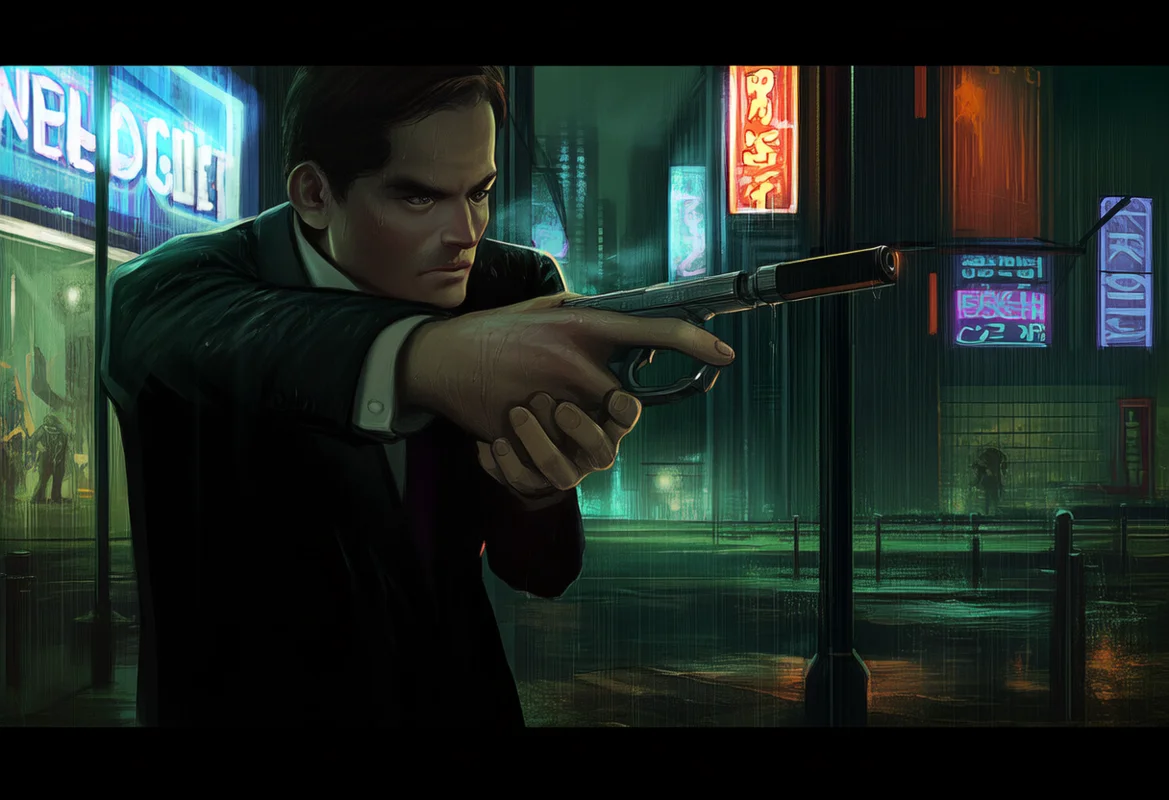
007 First Light arrives May 27, 2026, and it’s shaping up to be one of the most demanding PC releases of the year. Built on IO Interactive’s upgraded Glacier Next engine with full path tracing and DLSS 4.5 support, this James Bond stealth action game pushes PC hardware harder than anything the Hitman studio has shipped before. If you want smooth performance without sacrificing the lighting model that makes stealth gameplay work, you need the right configuration — and that’s exactly what this guide provides.
In this guide, we break down the best 007 First Light PC settings for every GPU tier — from the GTX 1660 minimum up through RTX 5070 path-tracing configs. We’ll explain why you cannot simply lower shadows for FPS, how DLSS 4.5 Multi Frame Generation works its magic, and what AMD GPU owners should expect. Whether you’re squeezing every last frame out of a budget rig or chasing the ultimate path-traced experience at 4K, we have you covered. Bookmark this page — we’ll update with real benchmarks after launch.
System Requirements & Engine Overview
007 First Light runs on Glacier Next, IO Interactive’s proprietary engine upgraded from the same foundation that powered Hitman World of Assassination. If you’ve played Hitman WoA, you know that engine was a masterclass in PC optimization — running smoothly on everything from GTX 1060s to RTX 4090s. Glacier Next adds a new volumetric smoke system, a full path tracing pipeline, and larger open environments, making 007 First Light significantly more demanding than its Hitman predecessors.
Where Hitman WoA could hit 60+ FPS on a GTX 1060 at 1080p Medium, 007 First Light requires at minimum a GTX 1660 for just 30 FPS at 1080p Low. That’s a substantial jump. The recommended specs target 60 FPS at 1080p High with an RTX 3060 Ti or equivalent.
Here are the official system requirements — note that IOI revised these downward from their initial, more demanding specs:
| Component | Minimum | Recommended |
|---|---|---|
| GPU | NVIDIA GTX 1660 (6GB) | RTX 3060 Ti / AMD equivalent |
| CPU | Intel Core i5-9600K | Intel Core i5-13500 / Ryzen 5 5600X |
| RAM | 16 GB | 16 GB (32 GB for path tracing) |
| VRAM | 8 GB (listed) | 8 GB |
| Storage | 80 GB SSD | 80 GB SSD |
| Target | 30 FPS at 1080p Low | 60 FPS at 1080p High |
Two important caveats: First, the minimum specs list 8GB VRAM but the minimum GPU (GTX 1660) only has 6GB — this contradiction strongly suggests DLSS is expected even at minimum settings. Second, the listed CPU “i5-9500K” does not technically exist; IOI likely means the i5-9600K or i5-10400F. We’ve noted the correction in the table above.
Also worth noting: 007 First Light is NOT on Game Pass at launch. Despite the Amazon MGM partnership and Xbox Series X/S availability, you’ll need to purchase the game on Steam at full price. Don’t count on a subscription shortcut here.
For help choosing hardware that meets these requirements, check our Best Graphics Card for Gaming guide for current recommendations.
The Stealth Lighting Problem — Why You Can’t Just Lower Shadows
In most PC performance guides, the first advice is “lower shadows and ambient occlusion for easy FPS gains.” Don’t do that in 007 First Light.
This is a stealth action game where lighting directly affects gameplay. Enemies detect you based on whether you’re standing in light or shadow. Shadow quality and ambient occlusion aren’t just cosmetic — they determine which areas are dark enough to hide in and which are lit enough to expose you. Lowering Shadow Quality to its lowest setting can actually change enemy detection behavior, making some stealth routes unreliable.
That doesn’t mean you’re stuck at maximum settings. The sweet spot is Medium for three key settings:
- Shadow Quality: Medium — Preserves dynamic shadow casting for stealth while cutting the rendering cost of ultra-high-resolution shadow maps
- Volumetric Effects: Medium — Maintains fog and smoke that conceal your position, without the full-resolution volumetric rendering of High/Ultra
- Ambient Occlusion: Medium — Keeps contact shadows that define dark hiding spots, with less GPU overhead than HBAO+ Ultra
Dropping these three settings from High/Ultra to Medium recovers roughly 40% of your FPS budget without destroying the stealth lighting model. Going below Medium, however, risks breaking the gameplay experience — shadows become too coarse to reliably judge cover, and AO artifacts can make dark corners look artificially bright.
This is the single most important thing to understand about optimizing 007 First Light: performance and gameplay are intertwined. You can’t brute-force your way to higher FPS by gutting visual settings the way you might in a shooter. Think of it like tuning a racing sim — you need the physics to stay accurate even as you trim visual fat.
DLSS 4.5 & Path Tracing Deep Dive
007 First Light ships with full DLSS 4.5 support, and it’s not just a checkbox feature — it’s practically mandatory for path tracing. Here’s what’s on the table:
- DLSS Super Resolution — The classic upscaling mode. Render at a lower resolution, upscale with AI. Quality mode (67% render scale) is the best balance of sharpness and performance.
- DLSS Ray Reconstruction — Replaces traditional ray tracing denoisers with an AI model. This is especially important in 007 First Light because path tracing generates noisy images that need denoising. Ray Reconstruction produces cleaner results with fewer samples, effectively giving you better image quality at the same FPS — or the same quality at higher FPS.
- DLSS 4.5 Multi Frame Generation — Generates 2x, 3x, or 4x interpolated frames between each rendered frame. The new 6x mode (arriving via a future DLSS 4.5 update) pushes this even further. On an RTX 40 or 50 series card, this can double or triple your perceived framerate.
- DLAA (Deep Learning Anti-Aliasing) — For users with excess GPU headroom who want the best anti-aliasing without upscaling. Runs at native resolution.
Path tracing in 007 First Light includes full RT global illumination, reflections, and shadows. Without any upscaling, path tracing can reduce your FPS by 40–60% compared to rasterized rendering. That’s a massive hit — which is exactly why DLSS 4.5 is so critical.
Our recommended DLSS stack for path tracing:
- Enable DLSS Super Resolution at Quality mode first
- Enable DLSS Ray Reconstruction — this specifically targets denoising artifacts in path-traced scenes
- Enable Multi Frame Generation at 3x or 4x for RTX 40/50 series cards
- If image quality is too soft, switch Super Resolution to Quality (if you were on Balanced/Performance) or enable sharpening in the NVIDIA Control Panel
For a deeper comparison of how DLSS 4.5 stacks up against AMD’s FSR 4.1, check our DLSS 4.5 vs FSR 4.1: The 2026 Upscaling Battle Tested article.
You can also read more about DLSS technology on NVIDIA’s official DLSS page.
Best Settings: Budget 1080p (GTX 1660 / RX 6600)
If you’re running at or near the minimum specs, the goal is simple: 30–45 FPS at 1080p with playable stealth lighting. You won’t be enabling path tracing, but you can still get a solid experience.
| Setting | Value |
|---|---|
| Resolution | 1080p |
| Preset | Low (then customize) |
| Shadow Quality | Medium |
| Volumetric Effects | Medium |
| Ambient Occlusion | Medium |
| Texture Quality | Medium (High if 8GB+ VRAM) |
| Anti-Aliasing | TAA (or FSR Quality if available) |
| Ray Tracing | Off |
| DLSS | N/A (not supported on GTX 16 series) |
For GTX 1660 owners, the 6GB VRAM is the real bottleneck. Stick to Medium textures and close background applications to free up VRAM headroom. If you have an 8GB card like the RX 6600, you can push Textures to High safely.
The three Medium settings we recommend (Shadows, Volumetric, AO) are non-negotiable for gameplay reasons. Everything else can go to Low. You’ll sacrifice some visual richness in distant detail and particle effects, but the stealth gameplay will remain intact and functional.
Best Settings: Mid-Range 1440p (RTX 3060 Ti / RX 7600 XT)
The recommended spec tier targets 60 FPS at 1080p High, but with smart settings, you can push to 1440p and still maintain smooth gameplay.
| Setting | Value |
|---|---|
| Resolution | 1440p (with DLSS/FSR) |
| DLSS Super Resolution | Quality (67% render scale) |
| Shadow Quality | High |
| Volumetric Effects | Medium |
| Ambient Occlusion | High |
| Texture Quality | High |
| Ray Tracing | Off (or RT reflections only at 1080p) |
| DLSS Frame Gen | 2x (if RTX 40/50 series) |
At this tier, DLSS Super Resolution at Quality mode is your best friend — it renders at roughly 960p and upscales to 1440p with excellent image quality. The RTX 3060 Ti’s 8GB VRAM handles High textures comfortably at this resolution.
If you want to sample ray tracing, enable RT reflections only (not full path tracing) and drop to 1080p with DLSS Quality. You’ll get a taste of the improved reflections without the massive performance hit of full path tracing. Just don’t expect 60 FPS — aim for 40–50 FPS with frame generation smoothing things out.
Best Settings: High-End 4K (RTX 4070 Super / RX 7900 XT)
With a high-end GPU, you can target 60+ FPS at 4K with rasterized settings, or 60 FPS at 1440p with path tracing. Pick your poison.
| Setting | 4K Rasterized | 1440p Path Traced |
|---|---|---|
| Resolution | 4K (with DLSS Quality) | 1440p (with DLSS Quality) |
| Shadow Quality | High | High |
| Volumetric Effects | High | Medium |
| Ambient Occlusion | Ultra | High |
| Texture Quality | Ultra | Ultra |
| Path Tracing | Off | On |
| DLSS Ray Reconstruction | Off | On |
| DLSS Frame Gen | 2x | 3x |
For the 4K rasterized path, DLSS Quality at 4K renders at roughly 1440p internally — and the RTX 4070 Super handles that comfortably. You get near-native image quality with all the rasterized settings cranked up.
For the path-traced 1440p path, you’ll need DLSS Ray Reconstruction enabled to clean up the noisy path-traced image, and 3x frame generation to keep the perceived framerate above 60 FPS. The visual difference with path tracing is dramatic — global illumination bounces light realistically through every environment, and reflections are pixel-perfect rather than screen-space approximations.
Best Settings: Enthusiast Path Tracing (RTX 4080+ / RTX 5070+)
This is where 007 First Light truly shines. Full path tracing at 4K with all settings maxed — the way IOI and NVIDIA intended it to be experienced.
| Setting | Value |
|---|---|
| Resolution | 4K |
| DLSS Super Resolution | Quality |
| DLSS Ray Reconstruction | On |
| DLSS Frame Gen | 4x (or 6x when available) |
| Shadow Quality | Ultra |
| Volumetric Effects | Ultra |
| Ambient Occlusion | Ultra |
| Texture Quality | Ultra |
| Path Tracing | On (full) |
With an RTX 4080 or better, you can run 4K path tracing with DLSS Quality + 4x Frame Generation and expect 80–120 FPS perceived. The RTX 5070 and above will push even higher thanks to improved RT cores and Blackwell architecture efficiencies.
One critical tip: enable G-Sync if your monitor supports it. Frame generation can introduce slight input latency, and G-Sync smooths out the frame pacing to make the experience feel consistently responsive. IOI has confirmed G-Sync support, and it makes a noticeable difference in fast-paced stealth sequences.
For 32GB RAM users, you’ll also benefit from smoother texture streaming during the game’s large open-environment transitions. The Glacier Next engine streams assets aggressively — a pattern inherited from Hitman’s open-level design — and 32GB gives the streaming system more breathing room.
AMD GPU Guidance & NVIDIA Control Panel Tweaks
For AMD GPU owners: FSR support hasn’t been explicitly confirmed for 007 First Light yet, but it’s highly likely given the Glacier engine’s FSR integration history (Hitman WoA supports FSR 2.0). If FSR is available, use FSR 4.1 Quality mode as your primary upscaling option. Without DLSS Frame Generation, you’ll need to rely more heavily on lowering settings to hit your target FPS.
AMD users should also consider whether now is the right time to upgrade. Our RX 9000 Prices Are Dropping Fast — Should You Buy AMD in 2026? analysis covers the current market and whether an RX 9000 series card makes sense for 007 First Light and other 2026 releases.
NVIDIA Control Panel optimizations:
- Power Management Mode: Set to “Prefer Maximum Performance” — this prevents the GPU from downclocking during less demanding scenes, which can cause stutter when the action suddenly intensifies
- Shader Cache Size: Set to 10GB or “Unlimited” — Glacier Next compiles shaders on the fly, and a larger cache prevents stutter from recompilation
- Low Latency Mode: Set to “On” (not Ultra) — reduces render queue latency without the frame-rate penalty of Ultra mode
- Texture Filtering — Anisotropic Sample Optimization: On — slight performance gain with minimal quality loss
For more general optimization tips beyond 007 First Light specifically, check out our guide on how to optimize your PC for gaming.
You can also verify official system requirements and updates on 007 First Light’s Steam page and IO Interactive’s official site.
Frequently Asked Questions
Can your PC run 007 First Light?
If you have at least a GTX 1660, 16GB RAM, and an 80GB SSD, you can run 007 First Light at 1080p Low for around 30 FPS. Note that the listed 8GB VRAM minimum contradicts the GTX 1660’s 6GB — you’ll likely need DLSS or FSR to compensate if you’re at 6GB. For 60 FPS at 1080p High, aim for an RTX 3060 Ti or better.
Is 007 First Light on Game Pass?
No. Despite being available on Xbox Series X/S, 007 First Light is not on Game Pass at launch. You’ll need to purchase it separately on Steam or console storefronts.
Does 007 First Light support FSR?
FSR hasn’t been officially confirmed yet, but it’s highly likely given the Glacier engine’s FSR integration history in Hitman World of Assassination. We’ll update this guide as soon as IOI makes an official announcement.
How much does path tracing reduce FPS in 007 First Light?
Based on pre-release analysis and similar path-traced titles, expect a 40–60% FPS reduction when enabling full path tracing without upscaling. With DLSS 4.5 Super Resolution + Ray Reconstruction + Frame Generation, you can recover most of that performance on RTX 40/50 series cards.
What engine does 007 First Light use?
007 First Light uses Glacier Next (also referred to as Glacier 2), IO Interactive’s proprietary engine. It’s an upgraded version of the engine that powered the Hitman World of Assassination trilogy, with new volumetric rendering, path tracing support, and larger environment streaming capabilities.
Conclusion
007 First Light is one of the most technically ambitious games of 2026, and optimizing it on PC requires a different approach than most titles. The key takeaway: shadows and ambient occlusion affect stealth gameplay, so you can’t just gut them for FPS. Stick to Medium as your floor for those settings, and use DLSS 4.5 as your primary performance lever — especially if you’re enabling path tracing.
From budget GTX 1660 rigs to RTX 5080 powerhouses, there’s a configuration that works. The Glacier Next engine inherits Hitman’s optimization DNA, even if it demands significantly more hardware. And if you’re on an AMD card, keep an eye out for FSR support — we’ll update this guide the moment it’s confirmed.
We’ll be adding real benchmark data after the May 27 launch. In the meantime, check out our other PC performance guides: